

2026-08-20
Siddhant Hospital & Research Center, Kolhapur
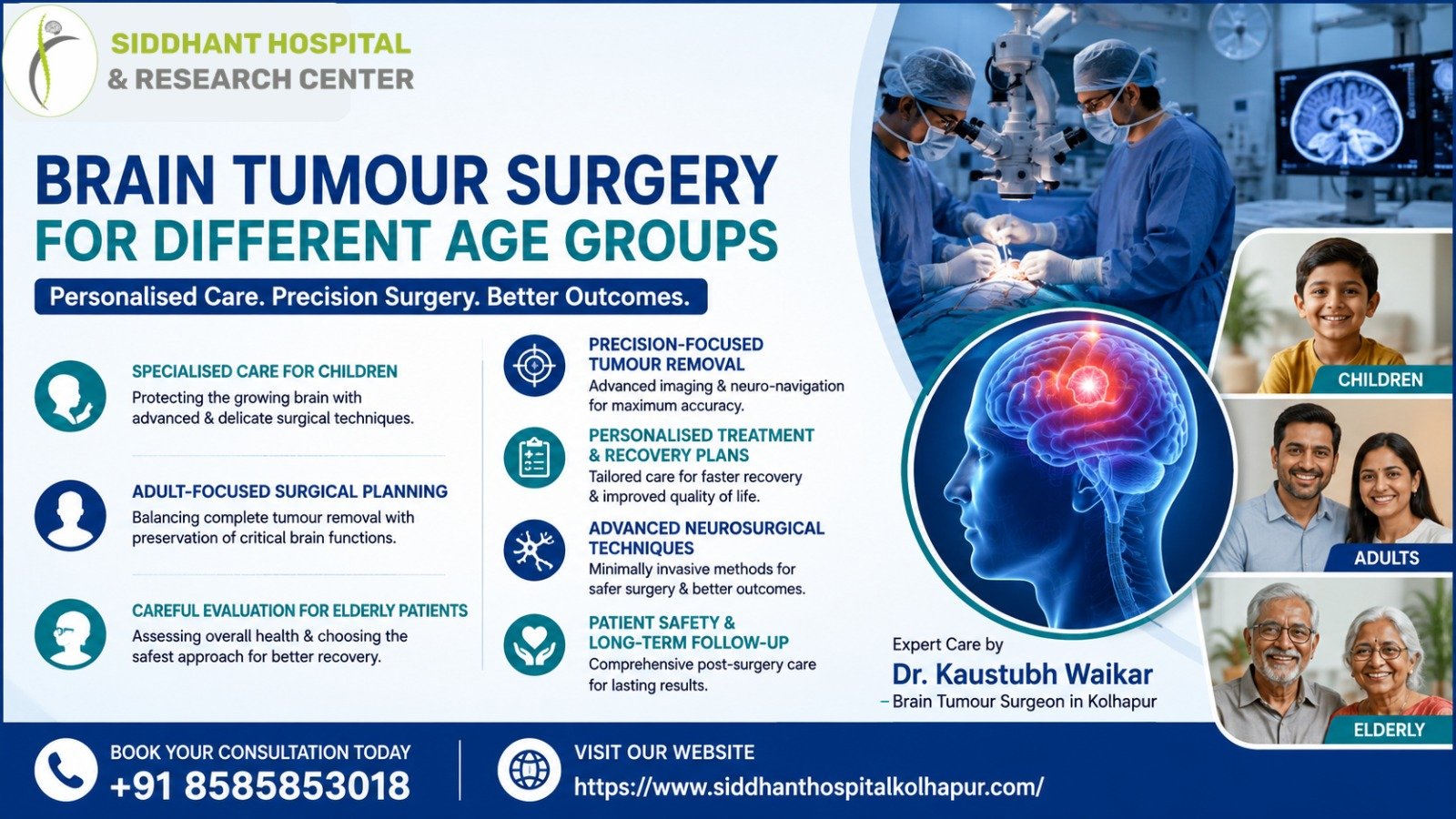
A brain tumour diagnosis brings a flood of questions, and one of the biggest is: what will a brain tumor operation actually mean for me or my loved one? The answer depends a great deal on age. A child's growing brain, an adult balancing work and family responsibilities, and an elderly patient managing other health conditions each need a different surgical approach and recovery plan.
At Siddhant Hospital & Research Center, Kolhapur, our neurosurgery team, led by Dr. Kaustubh Waikar, Brain Tumour Surgeon in Kolhapur, tailors every treatment plan to the patient in front of us — not just the tumour on the scan. Here's what patients and families across different age groups should know about surgery for brain tumour and what to expect.
Age affects almost every stage of treatment:
Paediatric brain tumours require an especially delicate approach, since the surgical team must remove the tumour while protecting a brain that is still developing.
Key considerations:
Adult patients are often balancing careers, family responsibilities, and financial concerns alongside their diagnosis, which shapes both the medical and emotional approach to care.
Key considerations:
For older adults, the conversation around surgery is often more nuanced, since age-related health factors play a bigger role in decision-making.
Key considerations:
One of the most common questions patients and families ask is how long recovery will take. While every case is different, recovery generally depends on:
As a general guide, most patients spend a few days in the hospital for initial monitoring, followed by several weeks of at-home recovery before resuming normal activities — though full recovery, especially for complex cases, can take a few months. Dr. Kaustubh Waikar and the neurosurgery team at Siddhant Hospital & Research Center provide each patient with a personalised recovery roadmap so families know exactly what to expect at every stage.
Regardless of age, a few principles guide every brain tumour case at Siddhant Hospital & Research Center:
Dr. Kaustubh Waikar leads the neurosurgery team at Siddhant Hospital & Research Center, Kolhapur, offering expert evaluation and surgery for brain tumour patients across all age groups — from children to the elderly. With a focus on precision, patient safety, and personalised care, Dr. Waikar and his team guide patients through every stage of treatment, from diagnosis to surgery to full recovery.
If you or a family member has been told a brain tumour is suspected, timely evaluation by an experienced neurosurgical team matters. Early, accurate diagnosis often opens up more treatment options and better outcomes — regardless of age.
At Siddhant Hospital & Research Center, Kolhapur, our neurosurgery department, headed by Dr. Kaustubh Waikar, combines advanced diagnostic technology with an age-sensitive, patient-first approach to brain tumour care. If you have questions about a diagnosis, need a brain tumor operation, or want a second opinion, our team is here to guide you through every step.
1. How long does a brain tumor operation usually take? Duration varies by tumour size, location, and complexity, but most procedures take anywhere from 3 to 8 hours. Your surgeon will give you a more specific estimate after reviewing your imaging and overall health.
2. What is the typical brain tumour surgery recovery time? Most patients stay in the hospital for a few days for monitoring, followed by several weeks of at-home recovery before resuming normal activities. Full recovery, especially for more complex cases, can take a few months and depends on age, overall health, and the extent of surgery.
3. Is surgery for brain tumour always necessary? Not always. Some slow-growing or benign tumours, particularly in elderly patients, may simply be monitored with regular scans rather than operated on immediately. Dr. Kaustubh Waikar and the team evaluate each case individually to recommend the safest, most appropriate course of action.
4. Is brain tumour surgery different for children compared to adults? Yes. Children require extra care to protect the brain's ongoing development, often involving paediatric specialists alongside the neurosurgery team, while adult and elderly cases focus more on preserving daily function and managing existing health conditions.
5. What are the risks of a brain tumor operation? As with any major surgery, risks can include infection, bleeding, or temporary changes in speech, movement, or memory, depending on the tumour's location. Advanced techniques like neuro-navigation and intraoperative monitoring help minimise these risks significantly.
6. Will I need additional treatment after surgery? Some patients, especially those with malignant tumours, may need radiation therapy or chemotherapy after surgery. Your treatment plan will be discussed in detail with the neurosurgery and oncology team.
7. How soon can I return to work or normal activities after surgery? This depends on the type of surgery, your age, and your job or lifestyle demands. Many patients who undergo minimally invasive procedures return to light activity within a few weeks, while more extensive surgeries may require a longer, supervised recovery period.
8. Who should I consult if a brain tumour is suspected? An experienced neurosurgeon should evaluate your case as early as possible. Dr. Kaustubh Waikar, Brain Tumour Surgeon in Kolhapur, and the team at Siddhant Hospital & Research Center offer detailed evaluation, diagnosis, and personalised treatment planning for patients of all ages.